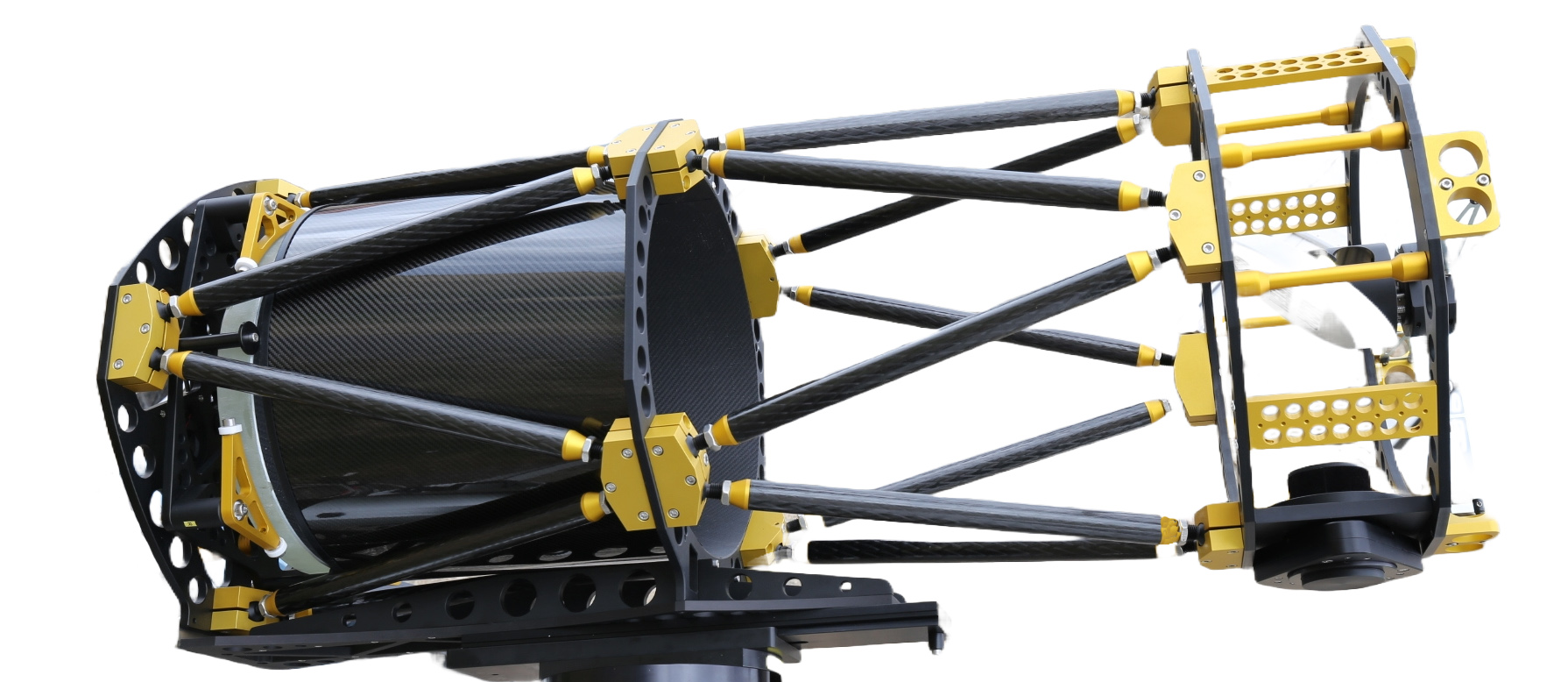
400 mm (16") Optical Tube assembly (OTA) - Designed for Advanced Astrophotography
Engineered for demanding astrophotographers and advanced observatories, the 400 mm F/3.6 astrograph delivers exceptional light‑gathering power combined with a fast optical system optimized for deep‑sky imaging. Its large aperture and rapid focal ratio allow faint structures and distant objects to be captured with significantly shorter exposure times, maximizing productivity during precious clear nights.
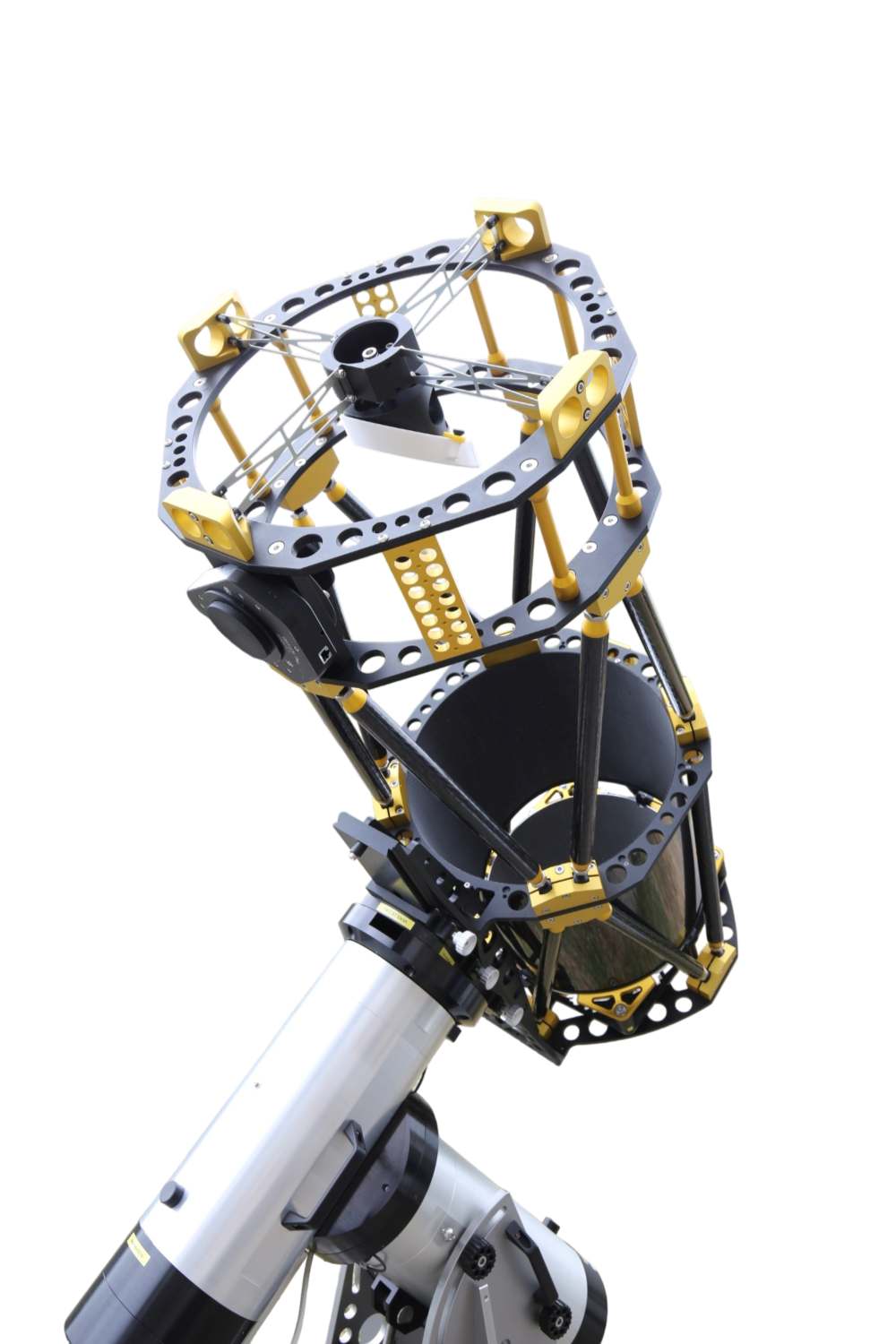
The telescope structure is built from carbon fiber, providing an excellent combination of lightweight construction and high mechanical rigidity, while also offering very low thermal expansion to maintain optical stability throughout the night.
Equipped with a dedicated field corrector, the system delivers a fully corrected image circle of 50 mm, making it perfectly suited for modern large‑format CMOS and full‑frame sensors. The optical design ensures sharp, well‑corrected stars across the entire field, enabling high‑resolution wide‑field imaging without compromise.
Built for serious users who demand both speed, stability, and optical precision, this 400 mm F/3.5 astrograph is a powerful instrument for capturing the deep sky with outstanding efficiency and professional‑level image quality.
This OTA can be modified to accommodate F/ ratio from F/3 to F/4. The OTA presented here has a F/3.6 aperture ratio.
Optec Lynx 3" Ultra accurate and no backlash, 8.9 mm travel and 80 nm/steps max load : 9 kg
Corrected image circle
Ø 50 mm
Star Image size
3–6 µm across the field (up to 25 mm radius)
Fully illuminated field
30 mm (can be changed on demand)
Wavelength range
400 nm to 750 nm
Backfocus from corrector
65 mm
Secondary mirror diameter
120 mm - Linear obscuration of 0.3 (9% light loss) can be changed on demand
Total Wavefront Error
Total wavefront error (primary + secondary, without corrector): < 40 nm RMS on-axis
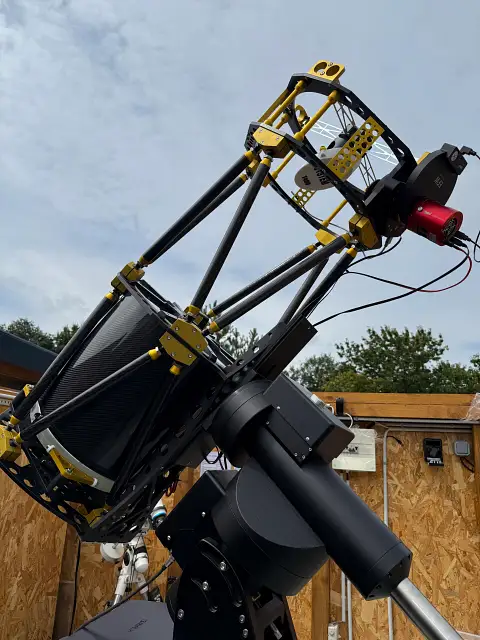
A customer of us owns this 400mm OTA. It was installed into an existing GM-3000 mount inside a wood moving roof shelter. Please check out his web site for more details A video can be watched below (In French) that presents the OTA inside the observatory
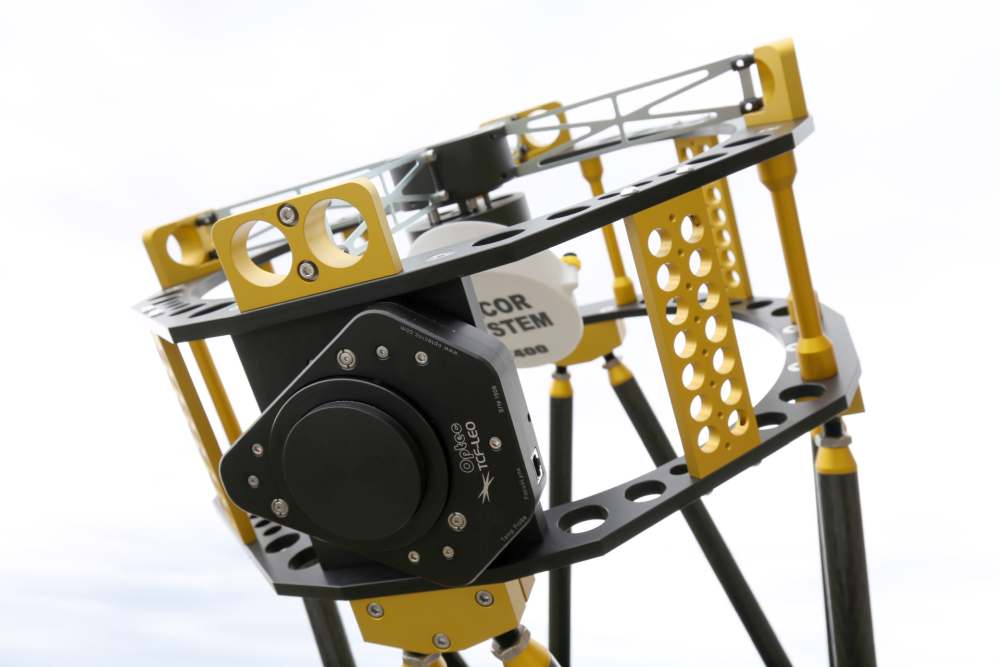
This OTA uses a OPTEC LYNX focuser to ensure precise camera positioning. The output diameter is 3". A Wynne field corrector has been put to provide a 50 mm corrected field with star size of 4 to 6µm rms across the whole field of view.
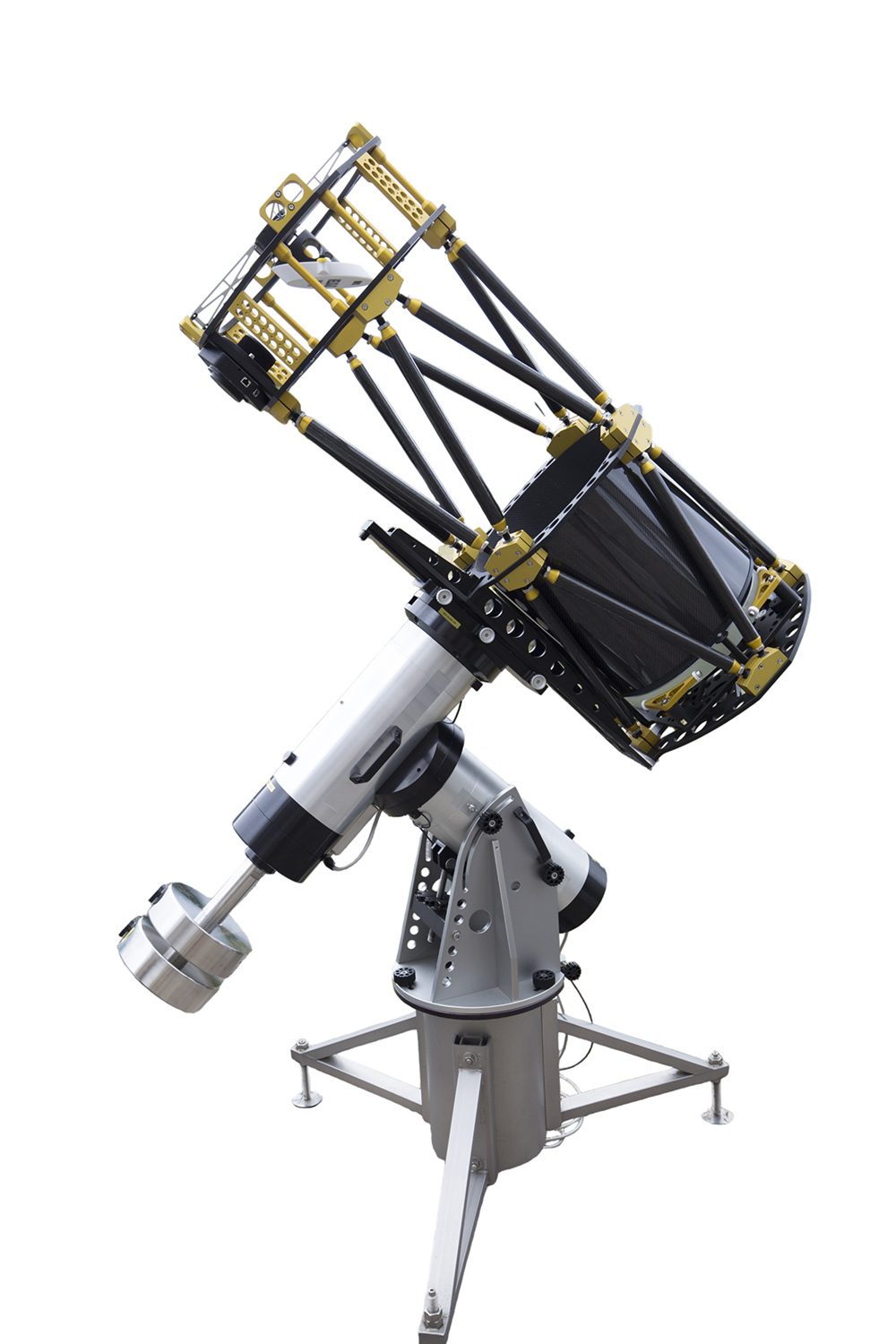
The main and secondary mirror are checked (on demand) with our shack-hartmann device on the optical axis and OTA ready to work. Careful design of the main/secondary mirror collimation system and holding has been taken into account. This is also critical to keep the OTA collimation as steady as possible across all sky elevations, thus also providing stability during un-tracked exposures. This OTA can be installed into our direct drive NOVA 120 mount, or any other mount that can cope this weight.
Overall view of NOVA 120 and this 400 mm OTA. Aluminum parts are black or yellow anodized.
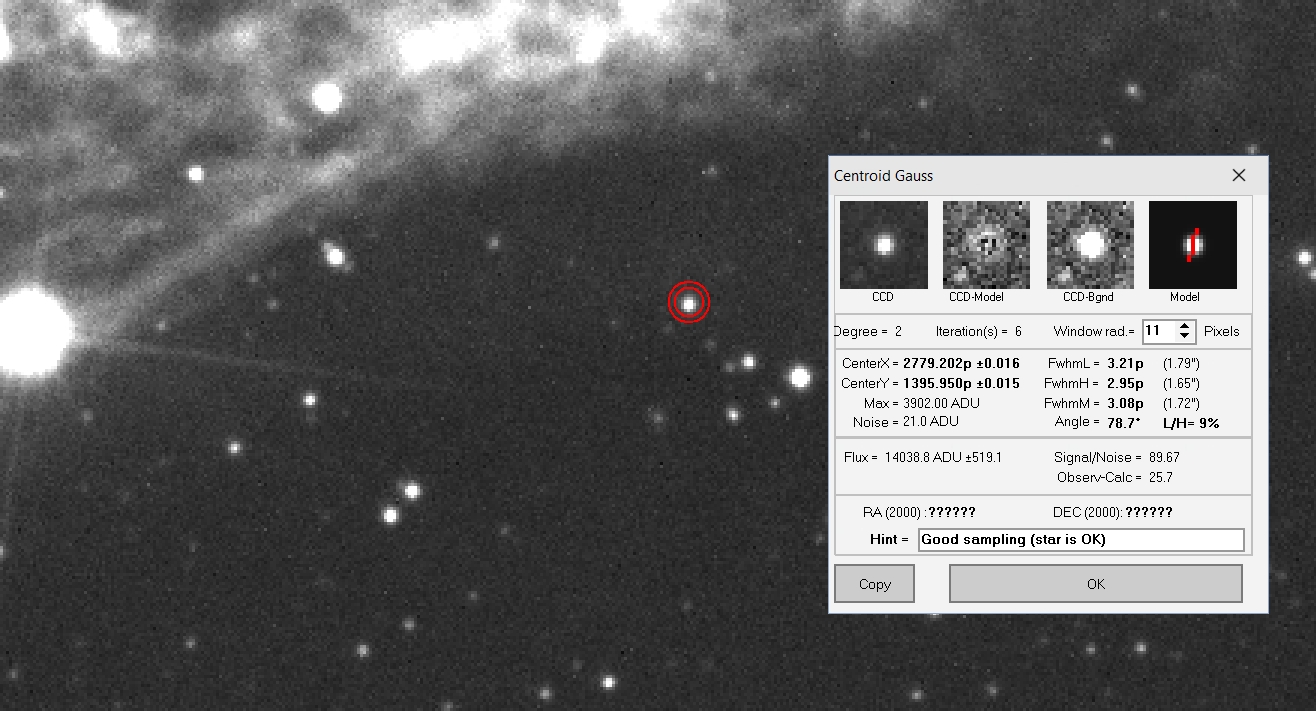
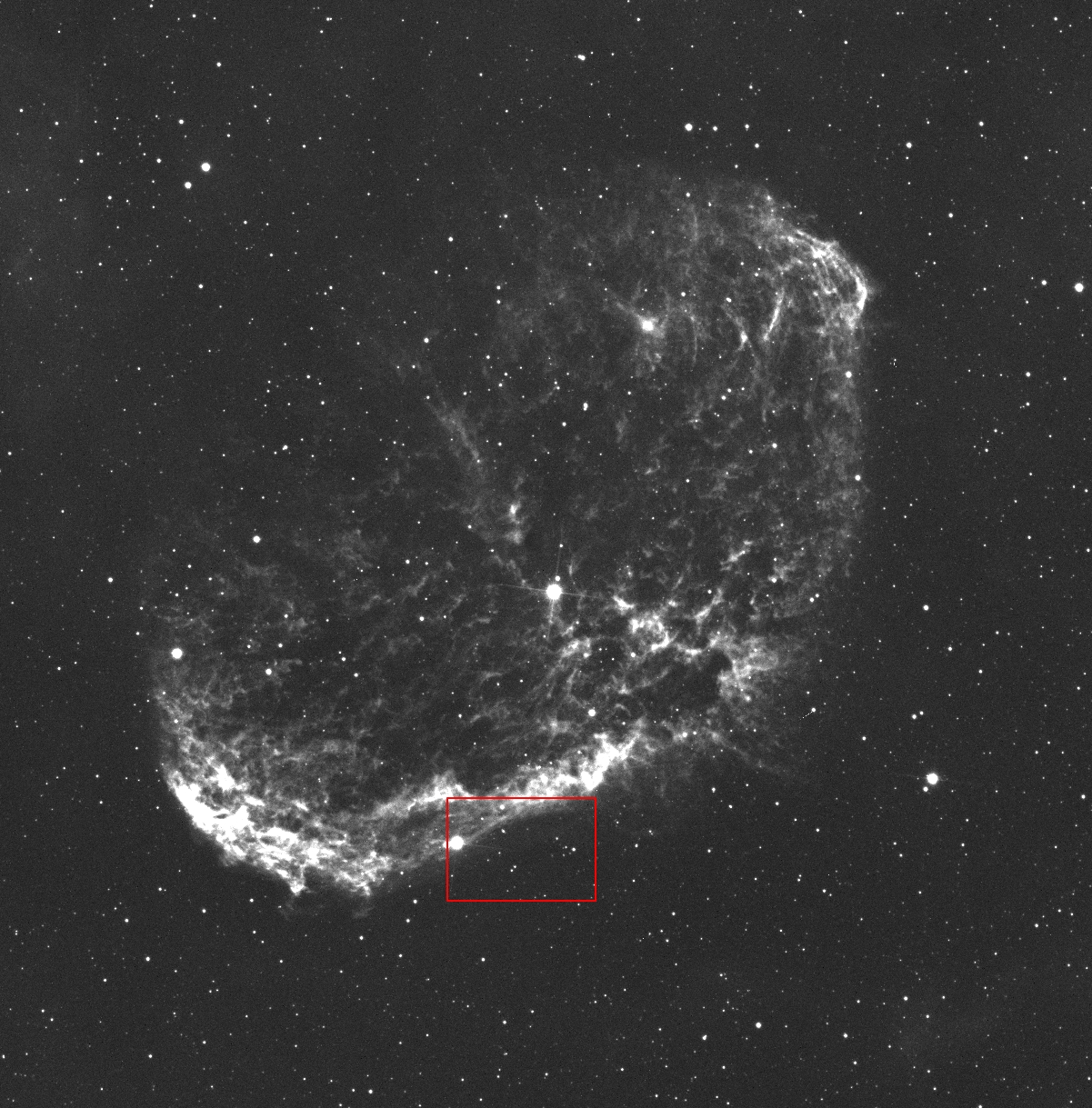
The next images shows raw data recorded with ASI 2600MM camera (1440 mm focal length, 3.8µm / pixel or 0.57 arcsec/pixel), with 10 minutes unguided exposures using NOVA 120 Mount. This is the famous NGC 6888 nebula.
An analysis of star shape shows a FHWM of 3 pixels that is 1.72 arcsec and ellipticity of 9% The seeing was really good that night also.
An ASI2600MM ZWO CMOS camera duo has been installed and provides a 56.2′ × 37.5′ arcmin field of view. The main purpose of this telescope is to discover / confirm near‑Earth asteroids and unusual minor bodies.